Sierra Crestellina – Casares’ own mountain
The closest and most distinctive mountain range to Casares is Sierra Crestellina. It is a protected natural area known for its jagged limestone ridges and large colonies of griffon vultures. The mountain range rises steeply above the village and offers some of the best views in the area.
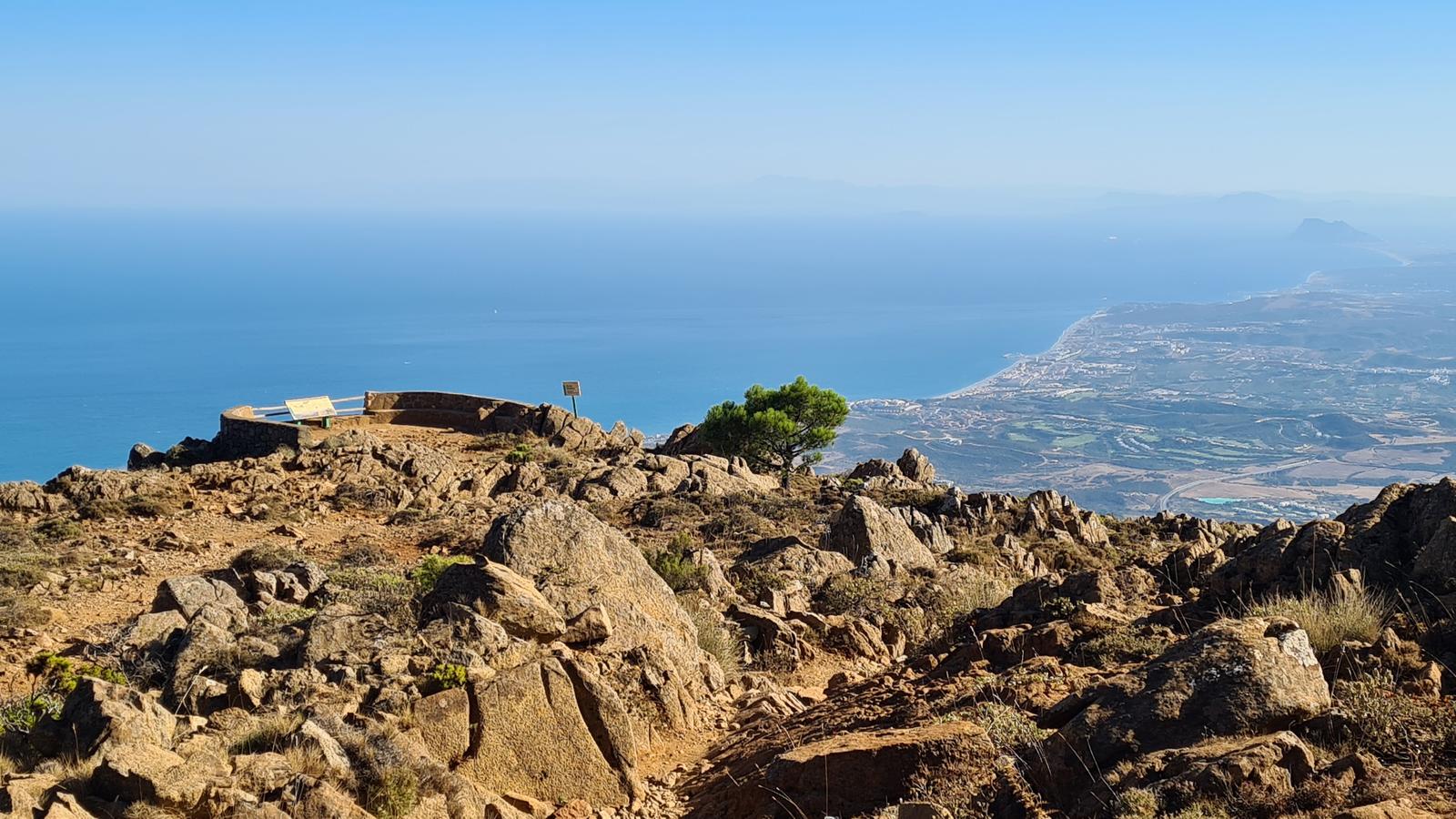
The most popular hike is to the Crestellina refuge, a round trip of around 8 kilometers. Here you walk through Mediterranean forests of cork oak, olive and carob trees before the path opens up to spectacular views of the Genal Valley and the coast. More experienced hikers can continue up to Cerro de las Chapas (943 m), the highest peak in the mountain range.
The highlights
- Short drive or walk from Casares
- Large populations of griffon vultures
- Stunning views of the Strait of Gibraltar
- Suitable as a half-day excursion
Sierra Bermeja – the red mountains
Southeast of Casares lies Sierra Bermeja, one of Europe’s most unique mountain areas. The mountains are made up of peridotite, a rare rock rich in iron that gives the landscape a characteristic reddish color. This is the world’s largest continuous peridotite massif.
The most famous hiking destination is Los Reales and Pico de los Reales (1452 m). Here you’ll also find a rare pinnate pine forest – the only one in the world that grows naturally on peridotite soil. Hikes range from short family-friendly circuits to demanding day hikes along the mountain ridges.
The highlights
- Unique geology and red-colored mountain terrain
- Rare pinnate pine forests
- Views of the Mediterranean, Gibraltar and Africa
- Great hiking opportunities all year round
Serranía de Ronda – Andalusia’s mountain kingdom
Casares is located on the south side of the huge mountain region Serranía de Ronda. This is a large mountain system that includes several natural parks and mountain ranges, including Sierra Bermeja, Sierra de las Nieves and parts of Grazalema.
For hikers, this means an almost endless network of trails linking white villages such as Ronda, Gaucín, Benadalid and Montejaque. Here you can walk through chestnut forests, limestone landscapes and old mule tracks that have been used for centuries.
The highlights
- Traditional “pueblos blancos”
- Historic traffic routes
- Varied nature and culture
- Perfect for multi-day hikes
Sierra de las Nieves – National Park
Northeast of Casares lies Parque Nacional Sierra de las NievesSpain’s newest national park. The mountain range reaches almost 2000 meters above sea level at the peak La Torrecilla (1919 m), which is one of the highest peaks in the province of Málaga.
The landscape consists of limestone, deep karst formations, caves and large forests of pinsapo. The summit of La Torrecilla is considered one of the classic hikes in Andalucía and offers sweeping views across much of southern Spain.
The highlights
- Spain’s newest national park
- La Torrecilla (1919 m)
- Impressive karst landscape
- Rare plants and wildlife
Sierra de Grazalema – limestone and green valleys
West of Ronda we find Parque Natural Sierra de Grazalema, one of Spain’s most famous natural areas. Grazalema is known for its dramatic limestone peaks, deep gorges and surprisingly green landscapes. The area receives more rainfall than anywhere else in Andalusia, resulting in lush valleys and forests.
Among the most famous routes are the trail through the Pinsapar forest and the hikes around the Garganta Verde gorge. Many consider Grazalema to be the most beautiful hiking area in all of southern Spain.
The highlights
- Spectacular limestone mountains
- Deep canyons and gorges
- Traditional white villages
- Some of Andalusia’s most famous hiking trails
Best hiking destinations by level
| Level |
Recommended areas |
| Easy |
Sierra Crestellina, local Casares routes |
| Moderate |
Los Reales in Sierra Bermeja, hikes in Grazalema |
| Demanding |
La Torrecilla in Sierra de las Nieves, backpacking in Crestellina |
| Multi-day tours |
Serranía de Ronda between the white villages |
For those staying or vacationing at Finca Alamo, the combination of Sierra Crestellina, Sierra Bermeja, Sierra de las Nieves and Grazalema is some of the best Andalucía has to offer. In less than an hour’s drive, you can experience everything from red volcanic mountains and rare spruce forests to alpine peaks and dramatic limestone gorges. This makes Finca Alamo a great starting point for mountain hiking in southern Spain.